

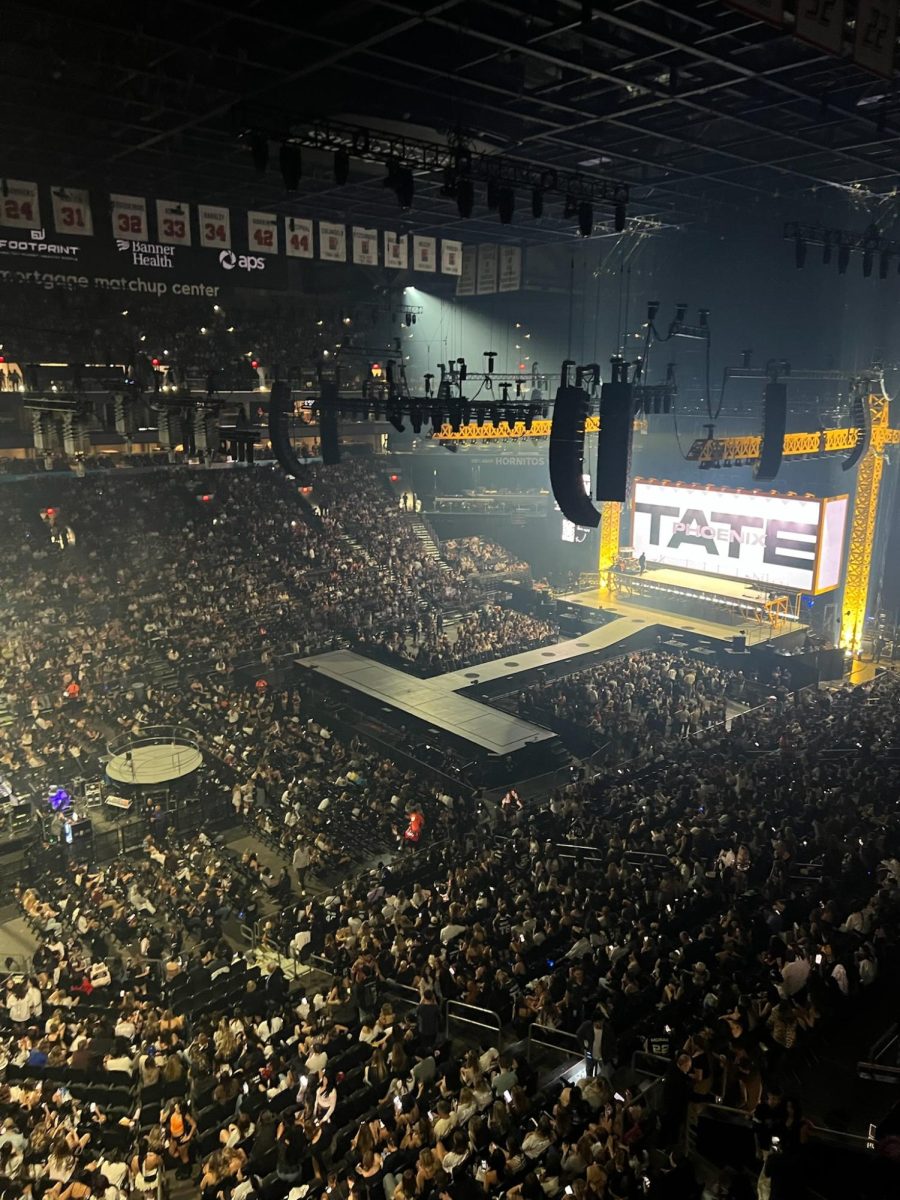


The crowd at the Kali Uchis concert was already buzzing when the lights dimmed and a video began to play on the big screen. In it, the Colombian-American singer spoke directly to her fans—this time not about a new song, but about something more personal. She shared a message in support of immigrants, reminding the audience that they deserve safety, dignity, and a place in society. For a moment, the lights dimmed, the cheers stopped, and everyone just listened. It was powerful to see someone with that much influence use her platform for something meaningful.
Michelle Islas, a senior at Chandler High who also attended the concert, said, “It was nice to see her standing up for her people and that they would not go without a fight.” That kind of honesty connects people and reminds fans that they’re not alone.
Celebrities have a responsibility to speak up about political and social issues. With such large audiences, their words can reach places that politicians and activists often cannot. A Harvard University study found that celebrity engagement can meaningfully increase voter participation and shape public opinion. Similarly, researchers at Northwestern University estimated that Oprah Winfrey’s endorsement of Barack Obama brought more than a million additional votes for him during the Democratic primary. When people with that kind of reach speak, it matters.
Although some argue that artistry should remain apolitical, pretending art exists outside of politics ignores reality as every song, movie, or post reflects the world around it. But there is a difference between genuine advocacy and paid influence. When celebrities partner with large lobbying organizations to push political messages, it starts to feel less like using their voice and more like selling one. Any law, policy, or candidate they promote affects real people, so that power should be used with care.
When advocacy comes from a place of truth, it inspires. When it’s driven by money or image, it loses meaning. Celebrities don’t need to be perfect or political all the time, but when they do speak up, it should come from conviction—not a contract. Advocacy does not take away from art but rather gives it genuine weight and substance. And sometimes, all it takes is a message on a big screen to remind us that our voices can matter too.